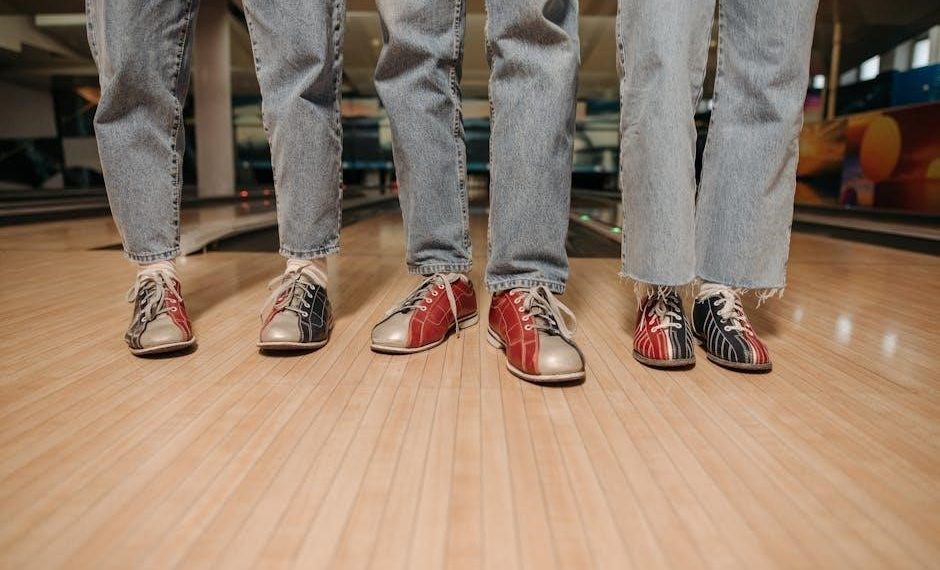
bowling shoe size guide
Finding the right bowling shoes is crucial for comfort and performance. This guide details sizing, conversions, and fit considerations for all ages and skill levels.
Why Proper Fit Matters
Achieving a precise fit in bowling shoes significantly impacts your game and overall experience. Ill-fitting shoes can lead to discomfort, blisters, and reduced stability during your approach and release. A snug, yet comfortable, fit allows for optimal power transfer and control, enhancing accuracy and consistency.
Properly sized shoes also minimize the risk of injury, preventing unwanted movement within the shoe that could strain ankles or knees. Considering sole size alongside shoe size is vital for a secure slide. Ignoring fit can hinder performance and enjoyment, while a well-fitted pair will elevate your bowling game.
Understanding Bowling Shoe Construction
Bowling shoes differ from athletic footwear due to their specialized design. They typically feature a distinct two-part construction: the upper and the sole. The upper, often made of leather or synthetic materials, provides support and a secure fit. The sole is crucial, with a sliding surface on one side for the approach and a braking surface on the other for stopping.
Understanding this construction helps with sizing. Sole size, independent of shoe size, determines the sliding area. Removable insoles are common, allowing for customization. Different sole materials affect slide characteristics. Knowing these elements aids in selecting shoes that complement your bowling style and ensure optimal performance.
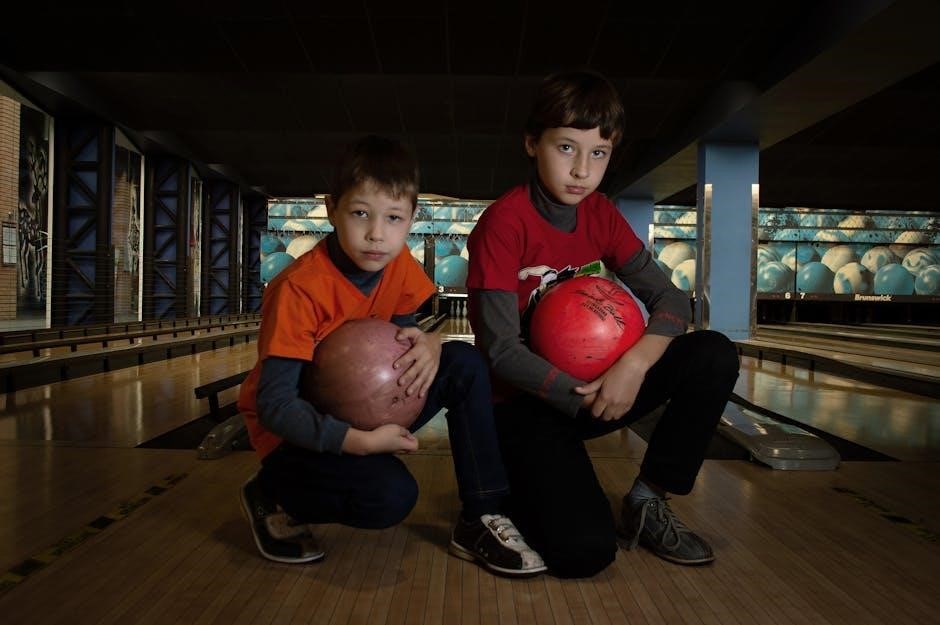
Men’s Bowling Shoe Size Guide
Men’s bowling shoe sizes generally align with standard US sizing. Accurate measurements and conversion charts are essential for a comfortable and effective bowling experience.
Standard US Men’s Sizes
Understanding standard US men’s bowling shoe sizes is the first step towards a proper fit. Typically, men’s sizes begin at US size 5 and extend up to size 15, often with half sizes available for a more precise fit. It’s important to remember that sizing can vary slightly between brands, so checking specific brand charts is always recommended.
Many bowlers find they require a different size than their everyday shoe size, often going up half a size to accommodate the specific shape and construction of bowling shoes. This is particularly true for shoes designed for sliding. Accurate foot measurement is paramount, as relying on past shoe sizes can lead to discomfort and reduced performance on the lane. Consider the sock thickness you’ll typically wear while bowling when determining your size.
Converting US Sizes to UK Sizes
Converting US men’s bowling shoe sizes to UK sizes requires a simple adjustment. Generally, subtract 0.5 to 1 size from your US size to find the equivalent UK size. For example, a US size 9 would typically translate to a UK size 8.5 or 9. However, this is an approximation, and variations can occur between manufacturers.
Always consult a specific brand’s conversion chart when possible, as some brands may run slightly larger or smaller. Online size conversion tools can also be helpful, but should be used as a guide rather than a definitive answer; Precise fit is crucial for bowling, so prioritizing accuracy during conversion is essential for optimal performance and comfort on the lanes.
Converting US Sizes to European (Euro) Sizes
Converting US bowling shoe sizes to European (Euro) sizes involves adding approximately 33 to 34.5 to your US size for men, and 34.5 to 36 to your US size for women. For instance, a US men’s size 9 would roughly equate to a Euro size 42-42.5. Women’s sizes require a slightly different calculation due to inherent differences in sizing standards.
It’s vital to remember that these are estimations, and discrepancies can exist between brands. Always refer to the specific manufacturer’s size chart for the most accurate conversion. Utilizing online conversion tools can provide a helpful starting point, but a precise fit necessitates checking the brand’s official guidelines for optimal comfort and performance.
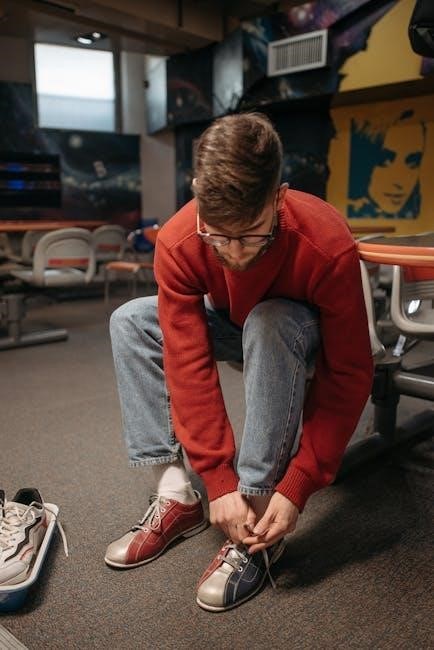
Women’s Bowling Shoe Size Guide
Women’s bowling shoe sizing differs from men’s; understanding standard US sizes, UK conversions, and Euro sizes is key for a comfortable, accurate fit.
Standard US Women’s Sizes
US women’s bowling shoe sizes typically begin at size 5 and extend up to size 13, though availability can vary by brand and retailer. It’s important to remember that sizing isn’t always consistent across manufacturers, so trying on shoes is always recommended when possible. Common sizes include 6, 7, 8, 9, and 10, representing the most frequently stocked options.
When initially selecting a size, it’s generally advised to choose a half-size larger than your typical street shoe size to accommodate the specific fit requirements of bowling shoes and allow for comfortable foot movement during the bowling motion. Precise measurement, detailed later, is crucial for avoiding issues like toe pinching or heel slippage.
Converting US Women’s Sizes to UK Sizes
Converting US women’s sizes to UK sizes requires a straightforward adjustment, though slight variations can occur. Generally, a US size 5 corresponds to a UK size 3, a US 6 equates to a UK 4, and a US 7 translates to a UK 4.5. Continuing this pattern, a US 8 is a UK 5.5, a US 9 becomes a UK 6.5, and a US 10 is a UK 7.5.
For larger sizes, a US 11 is roughly a UK 8.5, while a US 12 is a UK 9.5, and a US 13 is approximately a UK 10.5. It’s crucial to consult a detailed conversion chart, as these are approximate values. Always prioritize trying on the shoes to ensure a perfect fit, as brands may differ slightly in their sizing standards.
Converting US Women’s Sizes to European (Euro) Sizes
Converting US women’s sizes to European (Euro) sizes is essential for international purchases or when dealing with brands that primarily use the Euro system. A US women’s size 5 typically corresponds to a Euro size 35, while a US 6 equates to a Euro 36. A US size 7 translates to a Euro 36.5, and a US 8 becomes a Euro 37.5.
Moving up the scale, a US 9 is generally a Euro 38.5, a US 10 is a Euro 39.5, and a US 11 equates to a Euro 40.5. For larger sizes, a US 12 is approximately a Euro 41.5, and a US 13 is around a Euro 42.5. Remember to always verify with a specific brand’s chart, as slight variations can occur. Prioritize trying shoes on for the best fit.

Junior Bowling Shoe Size Guide
Proper fit is vital for young bowlers! This section provides charts for junior sizes, including EU conversions to US sizes, ensuring comfort and performance.
Junior Size Chart (EU)
Navigating junior bowling shoe sizes can be tricky, as they often differ from standard US sizing. The European (EU) sizing system is frequently used, especially for imported brands. This chart provides a quick reference for common EU sizes found in youth bowling shoes. Remember that slight variations can occur between manufacturers, so always prioritize a proper fit.
Here’s a general guideline:
- EU 33.5: Typically corresponds to a very small junior size.
- EU 34.5: A common starting point for younger bowlers.
- EU 35.5: Suitable for growing feet, offering a bit more room.
- EU 36.5: A mid-range size for older juniors.
- EU 37.5: Approaching adult sizes, for taller or older youth bowlers.
- EU 38.5: Often the largest size available in dedicated junior lines.
Always cross-reference with a US size conversion (see the next section) and prioritize trying on shoes whenever possible.
Converting Junior Sizes to US Sizes
Understanding the conversion between EU junior sizes and US sizes is essential for online purchases or when dealing with different brands. While not always exact, these conversions offer a helpful starting point. Remember to consider foot width and sock thickness for the most accurate fit. It’s always best to err on the side of slightly larger, allowing room for growth and comfortable play.
Here’s a general conversion guide:
- EU 33.5: Approximately US Youth 1-2
- EU 34.5: Approximately US Youth 2.5-3
- EU 35.5: Approximately US Youth 4-5
- EU 36.5: Approximately US Youth 5.5-6
- EU 37.5: Approximately US Youth 7-8
- EU 38.5: Approximately US Youth 8.5-9
Always verify with the specific brand’s size chart and prioritize trying shoes on for a perfect fit.
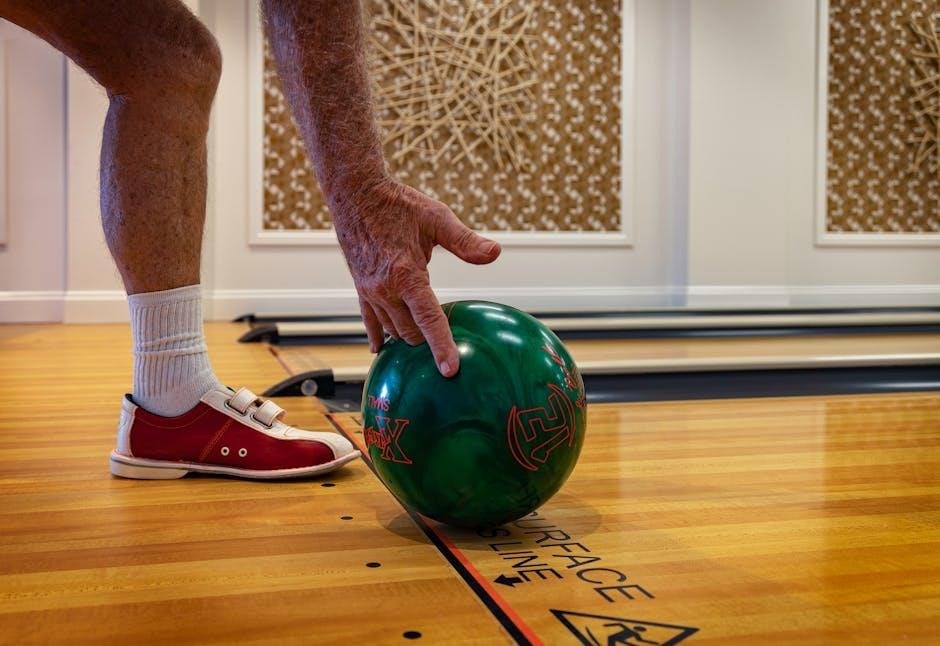
Sole Size Guide
Sole sizing differs from shoe size, impacting slide and balance. Men’s soles range from XSmall (5-6.5) to XLarge (13-15), ensuring optimal performance.
Men’s Sole Sizing (XSmall to XLarge)
Determining the correct sole size is vital for a consistent and controlled slide during your bowling approach. Men’s bowling shoe soles are categorized into five primary sizes: XSmall, Small, Medium, Large, and XLarge.
XSmall soles typically fit men’s shoe sizes ranging from 5 to 6.5. Small soles accommodate sizes 7 to 8.5. The most common Medium size fits shoes between 9 and 10.5. For larger feet, Large soles are designed for sizes 11 to 12, while XLarge soles cater to sizes 13 to 15.
It’s important to note that these are general guidelines; individual preferences and bowling styles may necessitate adjustments. Consider your typical slide distance and desired amount of slide when selecting a sole size.
Understanding Sole Size and Shoe Size Relationship
While shoe size is a starting point, it doesn’t directly dictate the ideal sole size for bowling shoes. The relationship is influenced by factors like bowling style, weight distribution, and preferred slide distance. A larger shoe size doesn’t automatically require a larger sole.
Generally, bowlers who prefer a longer, more controlled slide opt for larger sole sizes. Conversely, those favoring a shorter, quicker slide might choose smaller soles. It’s crucial to consider how much you want to slide after release.
Experimentation is key. Many bowlers try different sole sizes to find what feels most comfortable and enhances their performance. Don’t hesitate to consult with a pro shop expert for personalized recommendations.
Width Considerations
Bowling shoes come in various widths – narrow, medium, and wide – to accommodate different foot shapes. Proper width ensures comfort and prevents blisters during play.
Narrow Width Bowling Shoes
Narrow width bowling shoes are specifically designed for individuals with slender feet, preventing excessive movement within the shoe. This is particularly important for maintaining accuracy and control during your approach and release. A secure fit minimizes the risk of ankle rolling or discomfort caused by rubbing.
Identifying if you need a narrow width involves assessing how your foot feels in a standard medium-width shoe. If you experience significant heel slippage or have noticeable space on the sides of your foot, a narrow width is likely the better choice. Many manufacturers designate narrow widths with a letter ‘N’ or ‘2A’ in the shoe size.
Properly fitted narrow shoes enhance stability and responsiveness, contributing to a more consistent and powerful bowling performance. Don’t hesitate to explore specialized pro shops for expert fitting advice.
Medium Width Bowling Shoes
Medium width bowling shoes represent the standard fitting option, accommodating the majority of bowlers. These shoes offer a balanced fit, providing sufficient room for comfort without excessive looseness. They are a great starting point for most individuals when selecting bowling footwear.
Determining if a medium width is suitable involves assessing the overall volume of your foot; If your foot doesn’t exhibit extreme narrowness or width, a medium width is generally a safe bet. Shoe manufacturers typically don’t designate a specific letter for medium widths; it’s often the default sizing.
A well-fitted medium width shoe allows for a secure yet comfortable feel, enabling optimal power transfer and stability throughout your bowling motion. Consider trying on several brands to find the best fit for your unique foot shape.
Wide Width Bowling Shoes
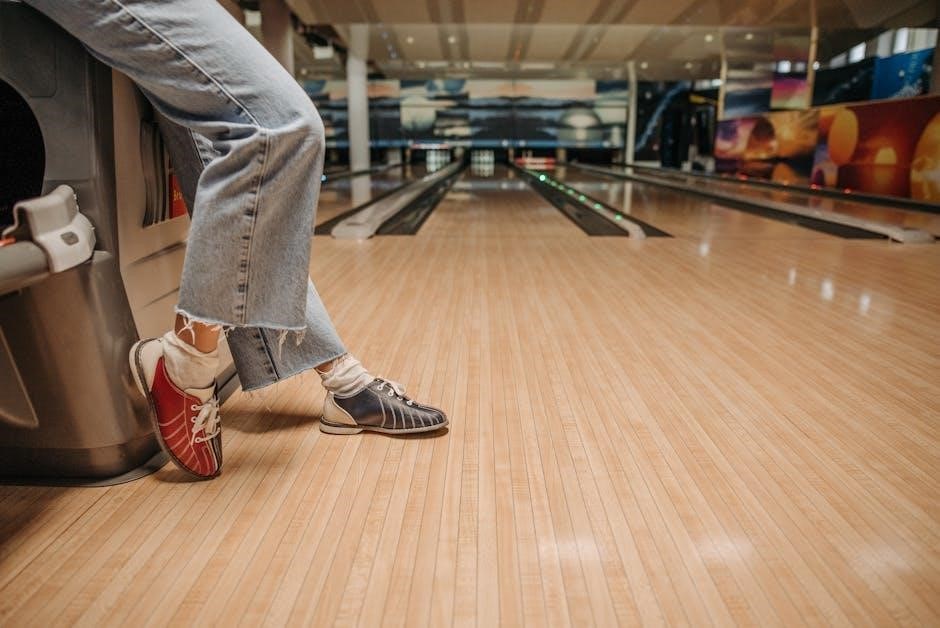
Wide width bowling shoes are specifically designed for bowlers with broader feet, preventing discomfort and ensuring a proper fit. These shoes offer increased volume in the toe box and overall width, accommodating feet that typically feel constricted in standard widths. Identifying the need for wide shoes involves recognizing pressure points or tightness when trying on regular-width options.
Manufacturers often label wide widths with letters like ‘W’ or ‘EE’. A correctly fitted wide shoe eliminates pinching and allows for natural foot movement during the bowling approach and release. Prioritize comfort to maximize performance and prevent blisters or foot fatigue.
Don’t hesitate to try on multiple brands, as wide width sizing can vary. A proper fit enhances stability and control.
Measuring Your Feet for Bowling Shoes
Accurate foot measurements are essential for a comfortable and high-performing bowling experience. Measure both length and width for the best possible shoe fit.
How to Accurately Measure Foot Length
To measure foot length, place a piece of paper on a hard, flat surface against a wall. Stand with your heel against the wall and trace the outline of your foot. Repeat with the other foot, as sizes can vary.
Measure the longest distance from the heel to the tip of your longest toe on each tracing. Use a ruler or measuring tape, ensuring it remains straight.
Record both measurements in inches or centimeters. When selecting a bowling shoe size, it’s generally recommended to add approximately 1/2 inch (or 1.27 cm) to the longer of the two measurements to allow for comfortable movement within the shoe. This prevents toes from hitting the end during your approach.
How to Accurately Measure Foot Width
Measuring foot width is essential for finding a comfortable bowling shoe. After tracing your foot length, identify the widest part of your foot on the tracing. This is typically across the ball of your foot.
Draw a straight line perpendicular to the length measurement, touching the widest points on both sides of the foot tracing. Measure the distance between these two lines using a ruler or measuring tape.
Record this measurement in inches. Bowling shoe widths are generally categorized as Narrow, Medium, or Wide. Compare your measurement to width charts provided by shoe manufacturers to determine the best fit. A proper width prevents pinching or excessive movement during play.
Bowling Shoe Materials and Fit
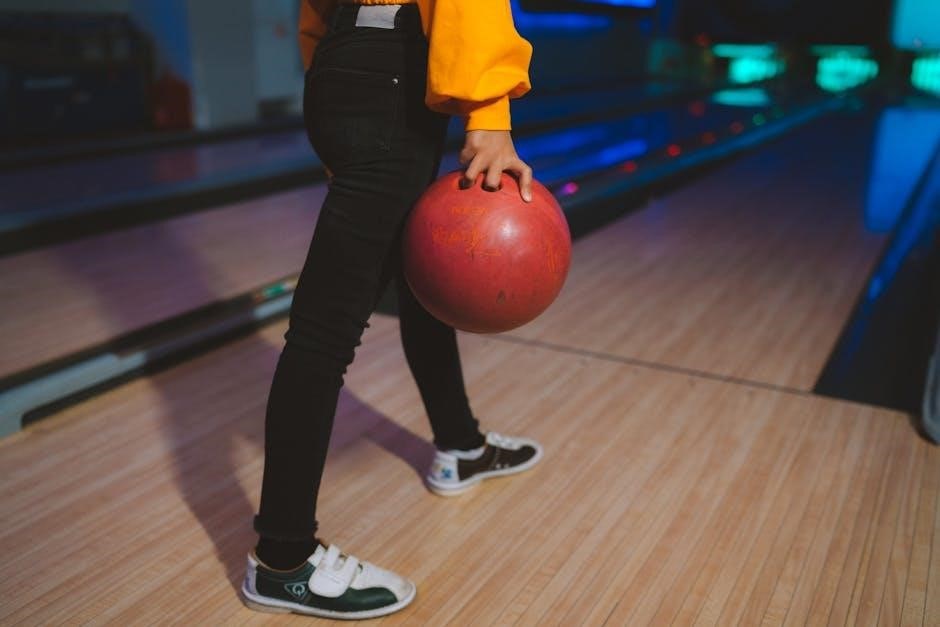
Material impacts fit; leather stretches, while synthetics hold their shape. Consider this when selecting size and width for optimal comfort and performance.
Leather Bowling Shoes ⎻ Fit Considerations
Leather bowling shoes are a popular choice due to their comfort and ability to mold to the bowler’s foot over time. However, this characteristic necessitates careful consideration during the initial fitting process. Leather tends to stretch with wear, approximately a half-size or even a full size wider and longer.
Therefore, it’s generally recommended to select a leather bowling shoe that feels snug, but not overly tight, during the fitting. Avoid shoes with significant heel slippage, as this won’t improve with wear. Wearing your typical bowling socks during the fitting is essential to ensure an accurate assessment of the fit. Allowing a small amount of toe room is also advisable, anticipating the natural expansion of the leather.
Synthetic Bowling Shoes ⏤ Fit Considerations
Synthetic bowling shoes, often made from materials like polyurethane or nylon, differ significantly from leather in terms of fit. Unlike leather, synthetic materials generally do not stretch considerably after purchase. Consequently, achieving a precise fit from the outset is paramount.
These shoes should feel comfortable immediately, with no areas of pinching or rubbing. A snug fit is still desirable, providing adequate support, but avoid selecting a size that feels too restrictive. Pay close attention to the heel; minimal slippage is ideal, as it’s unlikely to diminish with wear. Always try on synthetic shoes with your bowling socks to guarantee accuracy.
Common Bowling Shoe Fit Problems
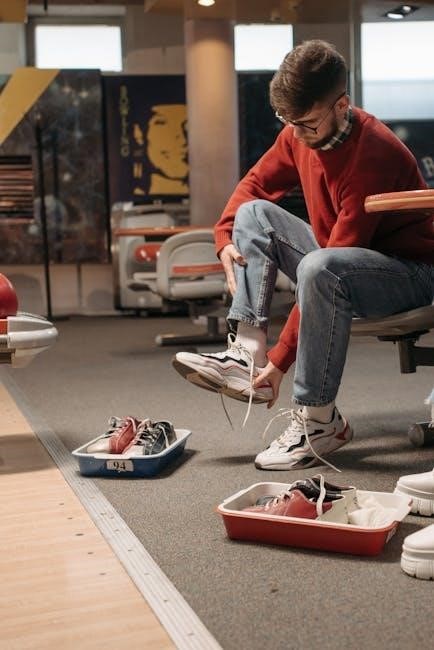
Ill-fitting bowling shoes can hinder performance and cause discomfort. Common issues include shoes that are too tight, restricting circulation, or too loose, impacting control.
Too Tight Bowling Shoes
Experiencing discomfort from overly tight bowling shoes is a frequent problem. Symptoms include noticeable pressure points, particularly around the toes and sides of the feet, and potential numbness during or after play. This constriction can impede blood flow, leading to discomfort and reduced performance on the lane.
If your shoes feel snug initially, consider if you’re wearing appropriate bowling socks – thicker socks can exacerbate tightness. Attempt to wiggle your toes; limited movement indicates a too-tight fit. Prolonged wear of tight shoes can even contribute to blisters or more serious foot issues. Don’t ignore the warning signs; prioritize comfort and proper fit to enjoy your bowling experience.
Too Loose Bowling Shoes
Bowling shoes that are too loose present a different set of challenges. Excessive movement within the shoe can compromise stability during your approach and release, negatively impacting accuracy and power. You might notice your heel lifting or your foot sliding forward with each step, creating an unstable base.
This looseness can also lead to blisters due to increased friction. If you experience significant space around your heel or toes, the shoes are likely too large. Consider using thicker bowling socks to take up some of the extra volume, but if the fit remains unstable, a smaller size or different width is necessary for optimal performance and comfort.

Bowling Shoe Size Charts ⏤ Comprehensive Overview
Detailed charts simplify conversions between US, UK, and European sizes for both adults and youth bowlers, ensuring a precise and comfortable fit.
Detailed Size Conversion Table (US, UK, Euro)
Navigating international sizes can be tricky, but this table offers a clear conversion guide for bowlers. Men’s sizes typically start at US 5 and extend to 15, correlating with UK sizes ranging from 4 to 14 and European sizes from 38 to 48. Women’s sizes generally begin at US 2 and go up to 13, translating to UK sizes 1 to 12 and European sizes 34 to 45.
Here’s a simplified overview:
- US 2 = UK 1 = Euro 34
- US 3 = UK 2.5 = Euro 35
- US 4 = UK 3 = Euro 35;5
- US 5 = UK 4 = Euro 36
Remember these are approximate conversions; always prioritize trying shoes on for the best fit.
Youth Size Conversion Table
Accurate sizing is vital for young bowlers, ensuring comfort and proper technique development. Junior shoe sizes often utilize European (EU) sizing, requiring conversion for US standards. EU size 33.5 typically equates to a US Youth size 1, while EU 34.5 corresponds to a US Youth 2. As feet grow, EU 35.5 is roughly a US Youth 3, and EU 36.5 translates to a US Youth 4.
Here’s a quick reference:
- EU 33.5 = US Youth 1
- EU 34.5 = US Youth 2
- EU 35.5 = US Youth 3
- EU 36.5 = US Youth 4
Always measure a child’s foot and consult a size chart before purchasing, as growth spurts are common.
Where to Buy Bowling Shoes & Get Fitted
Local pro shops offer expert fittings, while online retailers provide convenience. Consider both options for the best shoe selection and personalized advice.
Local Bowling Pro Shops
Visiting a local bowling pro shop is highly recommended for the most accurate fitting experience. Knowledgeable staff can assess your foot shape, bowling style, and provide personalized recommendations. They understand the nuances of bowling shoe construction and can help you select a shoe that optimizes your performance and comfort.
Pro shops often offer services like heat molding, which customizes the shoe to your foot for a superior fit. They can also advise on appropriate sole sizes and widths, ensuring proper slide and balance. Don’t hesitate to ask questions and try on multiple pairs to find the perfect match. Remember, a well-fitted bowling shoe can significantly improve your game!
Online Retailers
Shopping for bowling shoes online offers convenience and a wider selection, but requires careful attention to sizing. Always consult the retailer’s specific size chart, as variations exist between brands. Compare the chart to your foot measurements – length and width are essential.
Read customer reviews to gain insights into shoe fit and sizing accuracy. Be aware of return policies before purchasing, ensuring you can exchange or return shoes that don’t fit properly. Consider ordering from retailers that offer free returns to minimize potential costs. While convenient, online shopping lacks the personalized fitting experience of a pro shop.
Additional Tips for Finding the Perfect Fit
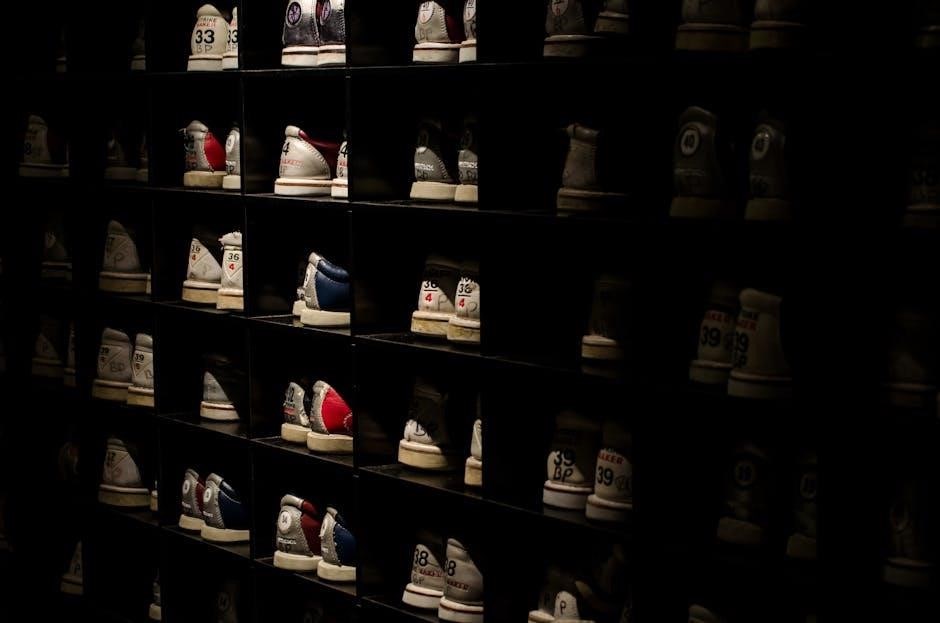
Always wear your bowling socks during fitting and account for potential foot swelling during extended play for optimal comfort and performance.
Consider Wearing Bowling Socks During Fitting
It’s absolutely essential to wear the socks you intend to bowl in when trying on bowling shoes. Bowling socks are typically thinner than everyday socks, providing a snug fit within the shoe without adding unnecessary bulk. This directly impacts the accuracy of your sizing.
Trying shoes on with regular socks can lead to an inaccurate assessment of the fit, potentially resulting in a shoe that’s either too tight or too loose when you’re actually on the lanes; A proper fit allows for optimal sliding and control, enhancing your bowling performance. Don’t underestimate the impact of sock thickness!
Allow for Foot Swelling During Play
Your feet naturally swell during physical activity, including bowling, especially over extended periods. Therefore, it’s vital to account for this when determining the correct shoe size. A shoe that feels comfortable initially might become constricting as your feet expand.
Leave approximately half an inch of space between your longest toe and the end of the shoe to accommodate swelling. This ensures continued comfort and prevents blisters or discomfort during your game. Consider trying on shoes later in the day when your feet are typically at their largest. Prioritize comfort to maintain focus and performance!